
Why Meta and Google Are Regulating (Not Banning) AI-Generated Content in 2025
AI-generated content has taken the internet by storm—whether it's blogs written by ChatGPT, deepfake videos circulating on social media, or AI-powered ads. But if you've heard that Meta and Google are “banning” AI content, let’s clear the air:
 Anuj Singh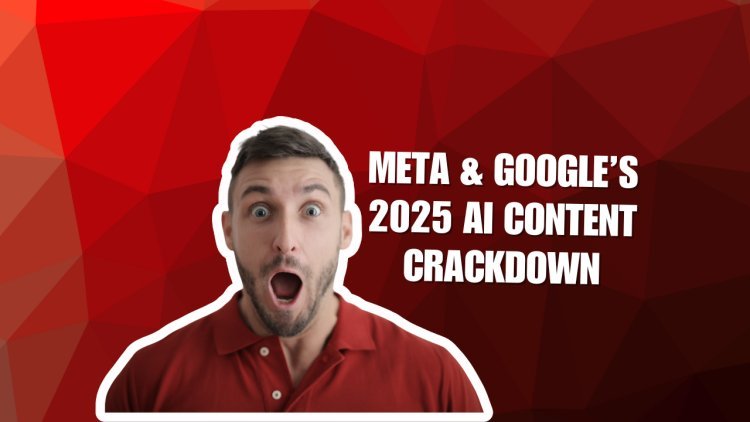
They’re not banning AI content. They’re regulating it. Heavily.
In this blog, we’ll unpack:
-
What Google and Meta are really doing with AI-generated content
-
Why these changes are happening now
-
How creators and marketers should adapt
Google’s Policy on AI Content: Quality Over Origin
Contrary to popular belief, Google does not ban AI-generated content. Their position is crystal clear:
“Using AI doesn’t violate our guidelines, as long as the content is helpful, original, and created for people—not to manipulate search rankings.”
— Google Search Central
✅ What Google Allows:
-
AI-assisted blogs, product descriptions, tutorials, etc.
-
Original, valuable content regardless of how it’s made
❌ What Google Penalizes:
-
Spammy, keyword-stuffed AI content
-
Mass-produced junk articles created solely to game SEO
-
AI-generated misinformation or clickbait
Translation: If you’re using tools like ChatGPT, Gemini, or Jasper AI to enhance your content creation while adding real human value, you’re good. But if you’re just spinning out hundreds of articles to rank quickly—expect penalties from Google’s helpful content and spam detection systems.
Meta’s Strategy: Transparency, Not Censorship
Meta (Facebook, Instagram, Threads) is taking a different but complementary approach. They aren’t banning AI-generated content—but they are labeling it clearly and controlling its use in sensitive areas like politics.
“Made with AI” Labels
Since mid-2024, Meta has been adding visible labels to:
-
AI-generated images and videos
-
Deepfake-style content
-
Synthetic audio
These labels appear even if users don’t self-report—Meta can detect AI watermarks and metadata using tools like C2PA and in-house AI classifiers.
⚠️ Banned or Restricted on Meta:
-
Political ads using Meta’s own AI tools
-
Ads that depict fake events or altered real people without proper disclosure
-
AI porn or deepfake nudes of real individuals (as urged by Meta's Oversight Board)
Meta’s goal: informed consumption. By labeling AI content, they aim to protect users without resorting to outright censorship.
Why Are They Doing This?
Both companies are walking a fine line—encouraging AI innovation while protecting public trust. Here’s why regulation has become a priority:
1. Combat Misinformation & Deepfakes
Election manipulation, fake celebrity endorsements, and AI-powered scams are rising fast. Both Google and Meta are under pressure from lawmakers, watchdogs, and users to crack down.
2. Maintain Trust in Search & Social Media
When people can’t tell what’s real, platforms lose credibility. Transparent labeling and strict ad policies help ensure that users can distinguish fact from fiction.
3. Promote Content Quality Over Cheap Automation
Google wants people to create content for humans, not for algorithms. Meta wants people to be aware when media is synthetic. Both want AI to augment, not exploit, content ecosystems.
How Creators and Brands Should Adapt
If you're a content creator, marketer, or business owner, here’s your action plan:
| Strategy | What To Do |
|---|---|
| SEO | Use AI for brainstorming and drafting, but always edit with human insight. Focus on originality and user intent. |
| Meta Ads | Avoid using AI for political or sensitive campaigns unless you're following disclosure rules. |
| Social Media | Be transparent when posting AI-generated images or videos—especially for storytelling, brand marketing, or influencer content. |
| Avoid Spam | Don’t mass-produce AI blog posts or auto-translate content across multiple domains. It’ll likely get flagged. |
Google vs Meta: Quick Comparison
| Feature | Meta | |
|---|---|---|
| AI Content Allowed? | ✅ Yes | ✅ Yes |
| Quality Control | Spam detection, E-E-A-T | Community standards, labeling |
| Banned Use Cases | Spam, manipulative content | Political AI ads, deepfakes |
| User Notice | Ranking penalties (if low quality) | Visible labels and disclosures |
| Focus | SEO integrity, helpful content | Trust, transparency, safety |
Final Thoughts
AI-generated content is here to stay. Meta and Google aren’t banning it—they’re shaping a future where synthetic content is used ethically, transparently, and responsibly.
If you’re creating meaningful, honest, and human-centric AI content, these changes won’t hurt you—they’ll actually help you stand out in the flood of low-quality automation.